2-column Layout
A familiar two-column agent-building design was used to align with other products in the Google ecosystem.
Custom data agents promised to help experts answer more questions across their organizations, but raw BigQuery data lacked the business context those agents needed to be accurate. I led the design of an authoring experience where experts could explain what their data meant, test the agent's answers, and publish it for colleagues who did not know SQL. In early private-preview evaluations, the structured context collected by the builder improved agent accuracy by roughly 10-20%.
Make a complex agent-building experience easy for data analysts, so they could build agents with richer enterprise context, improve answer accuracy, and share them with colleagues.
A familiar two-column agent-building design was used to align with other products in the Google ecosystem.
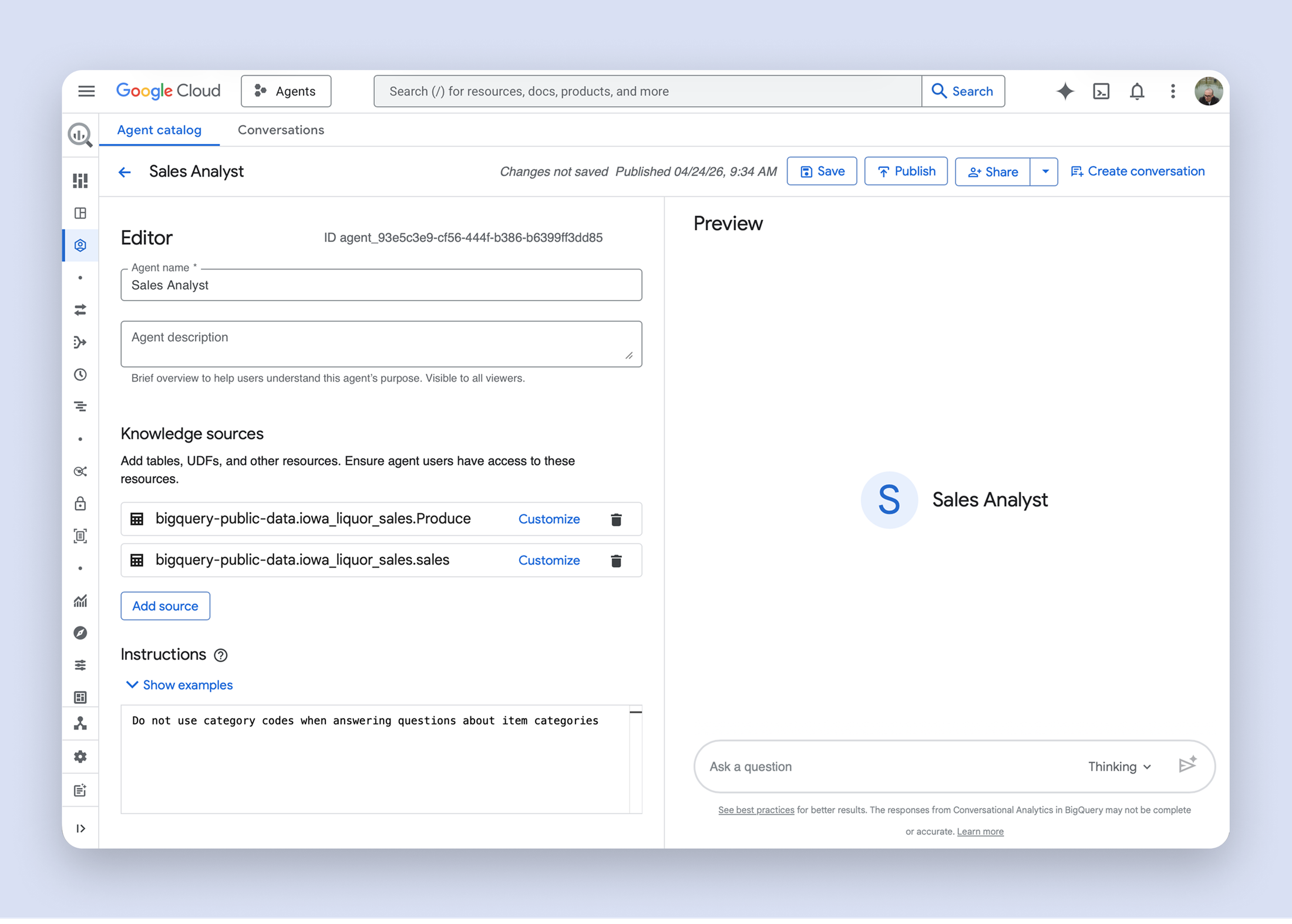
A familiar two-column agent-building design was used to align with other products in the Google ecosystem.
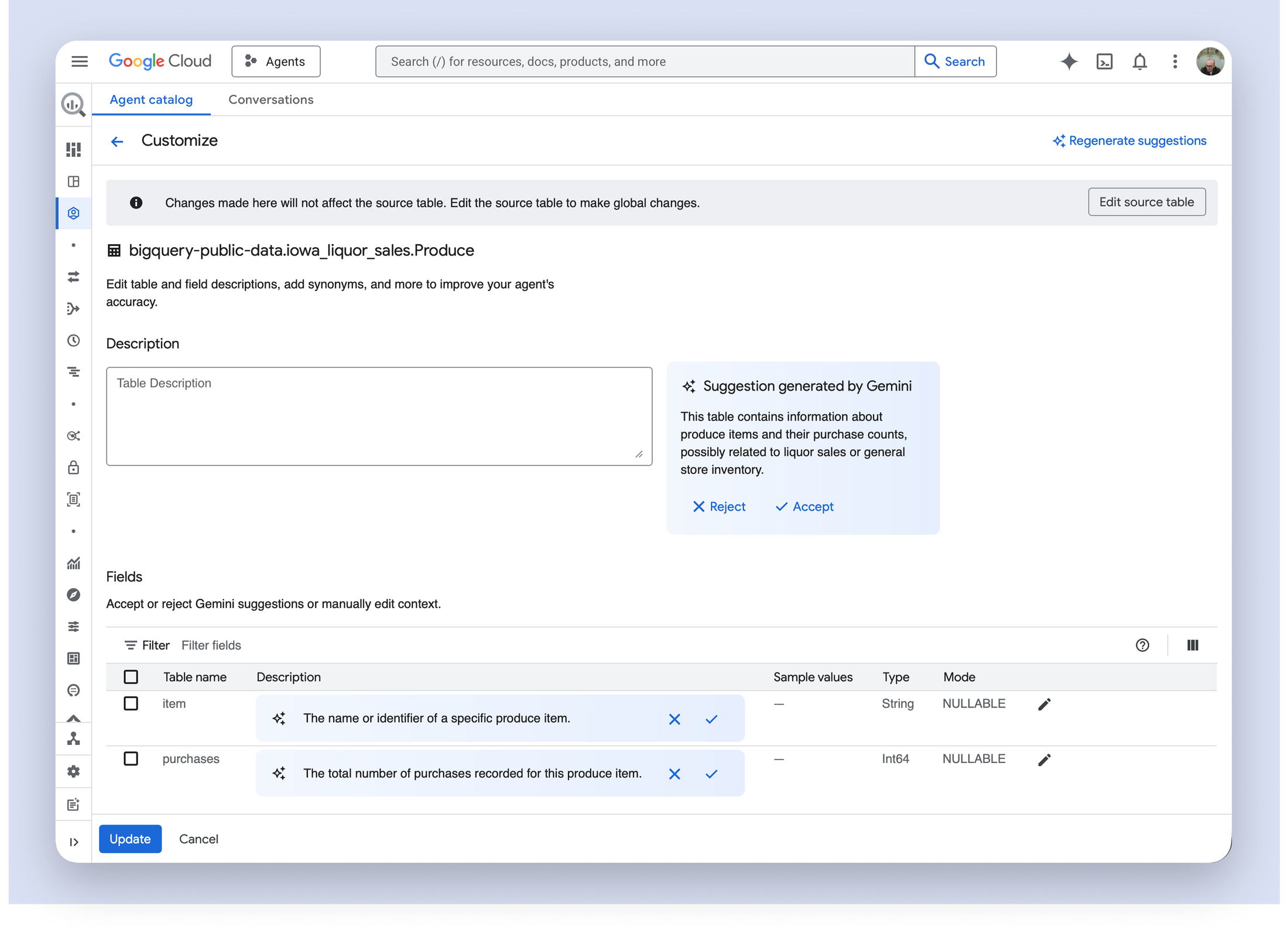
Users can drill into an agent’s data sources to add rich metadata that boosts agent understanding of the data. AI-assisted context generation is provided to speed up the process.
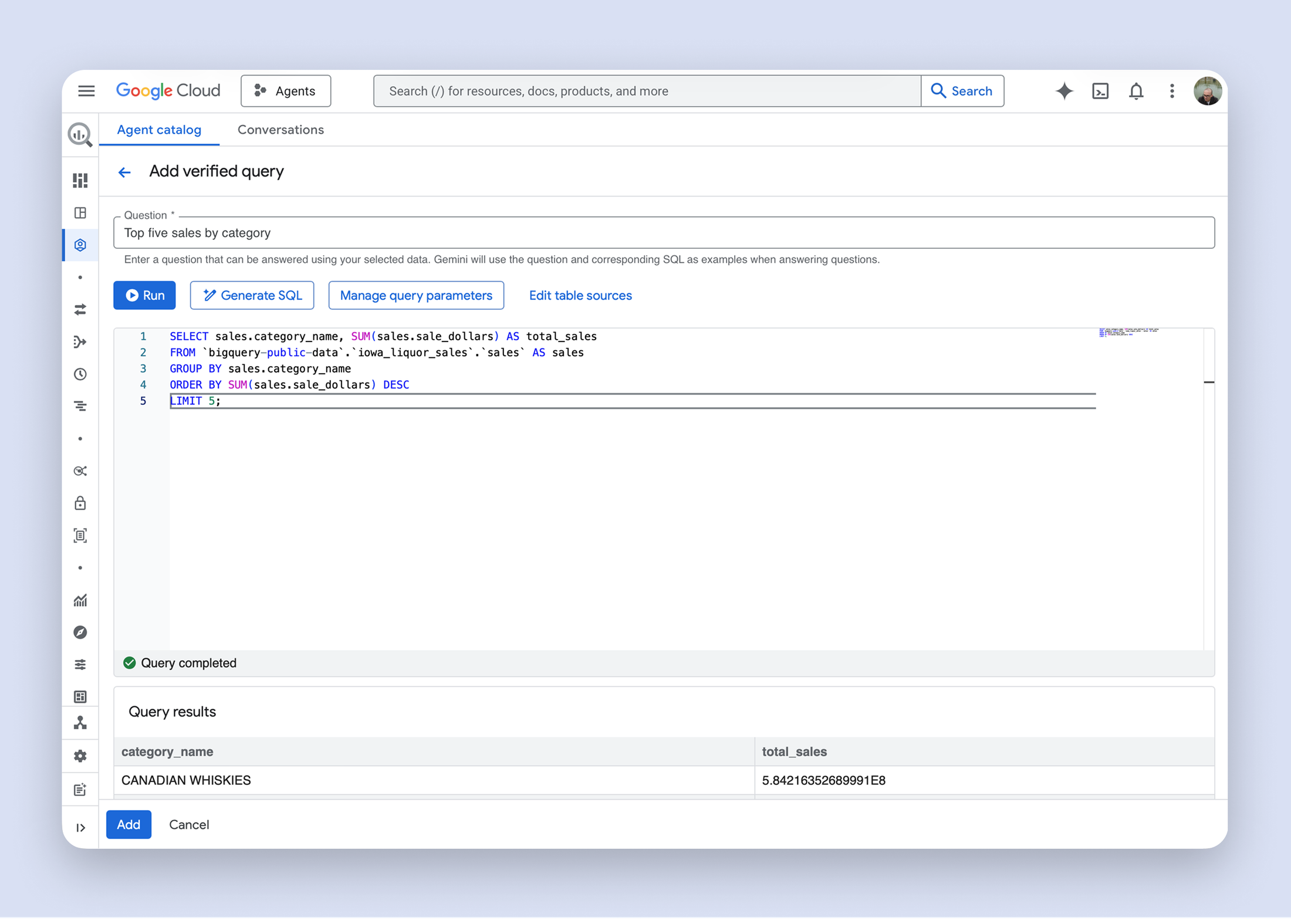
Users provide “golden” SQL queries to guide agents as they write SQL queries.
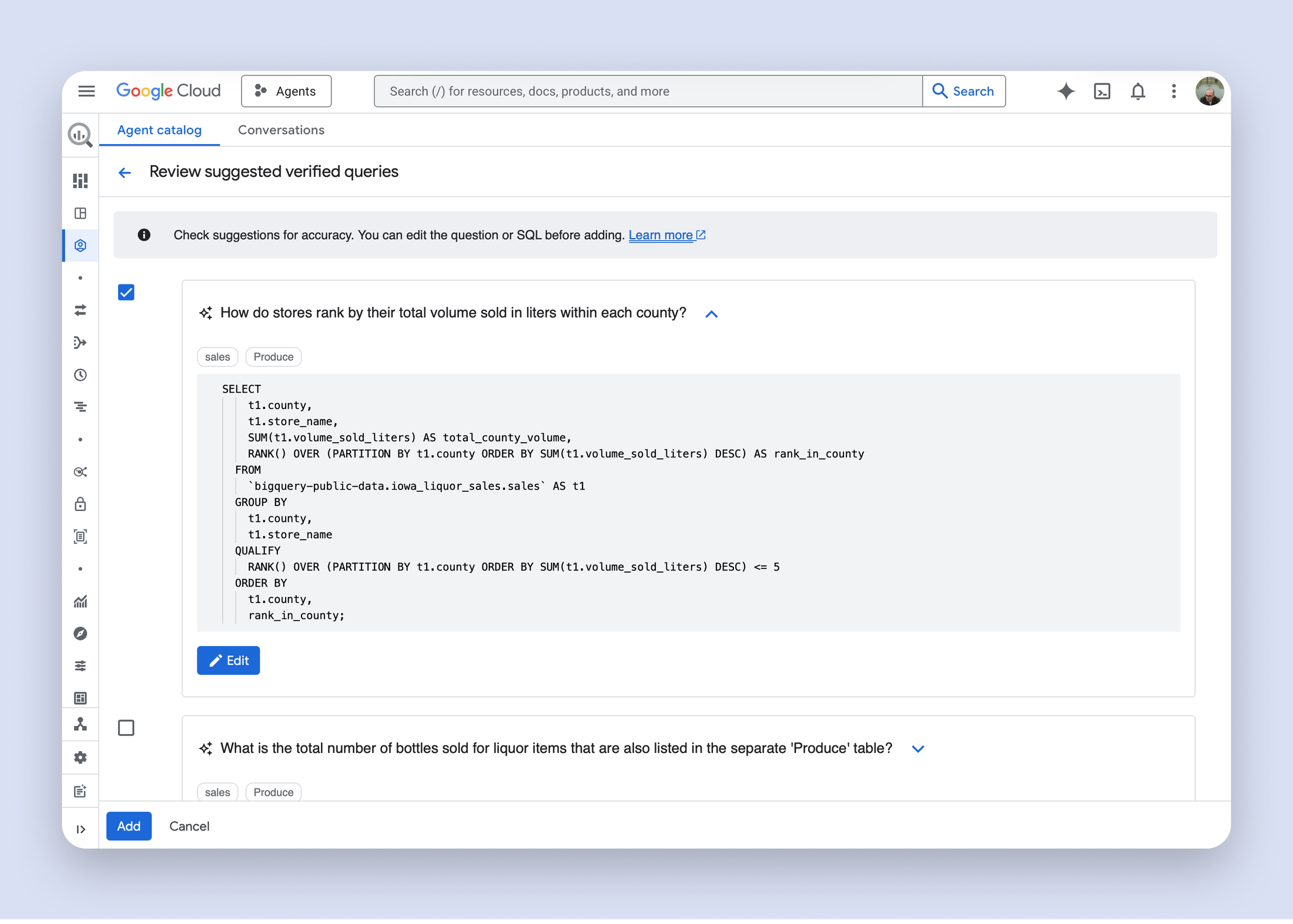
The system generates SQL queries based on the selected data sources. Users can verify and add the suggestions to their agent’s context.
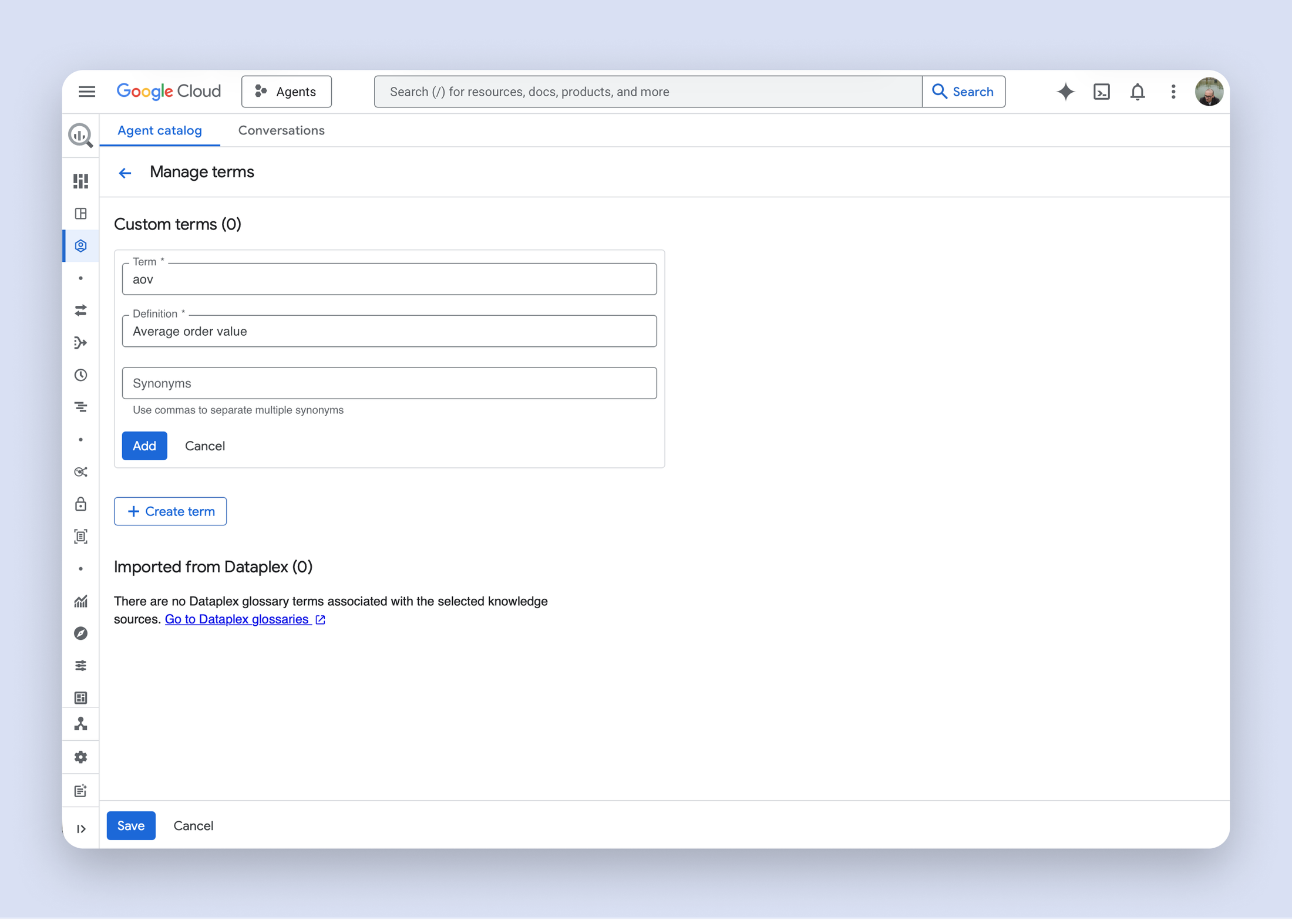
Users can add terms specific to their business to increase agent understanding of internal vocabulary.
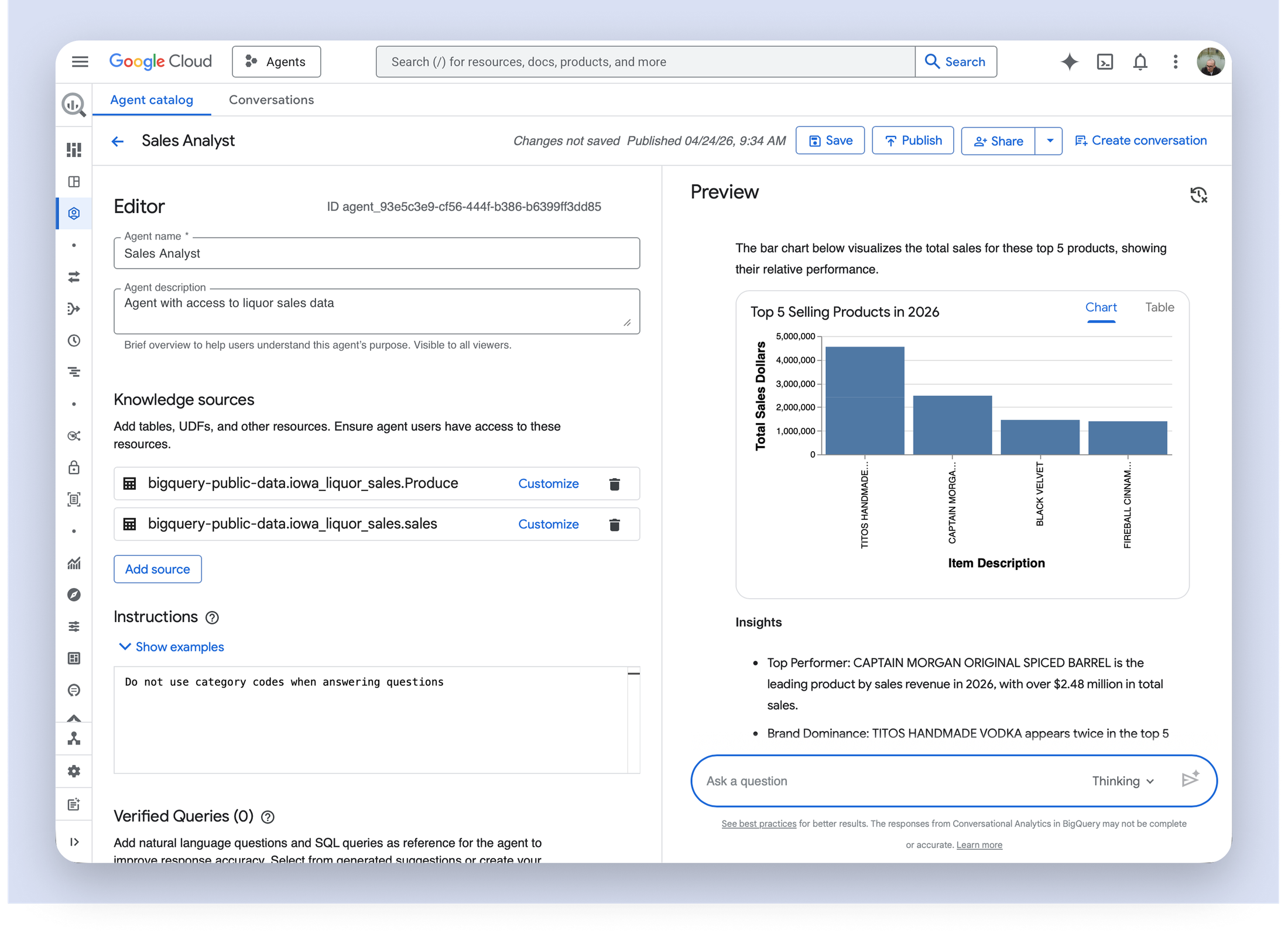
Once context is added, users can test their agent and iterate on their settings.
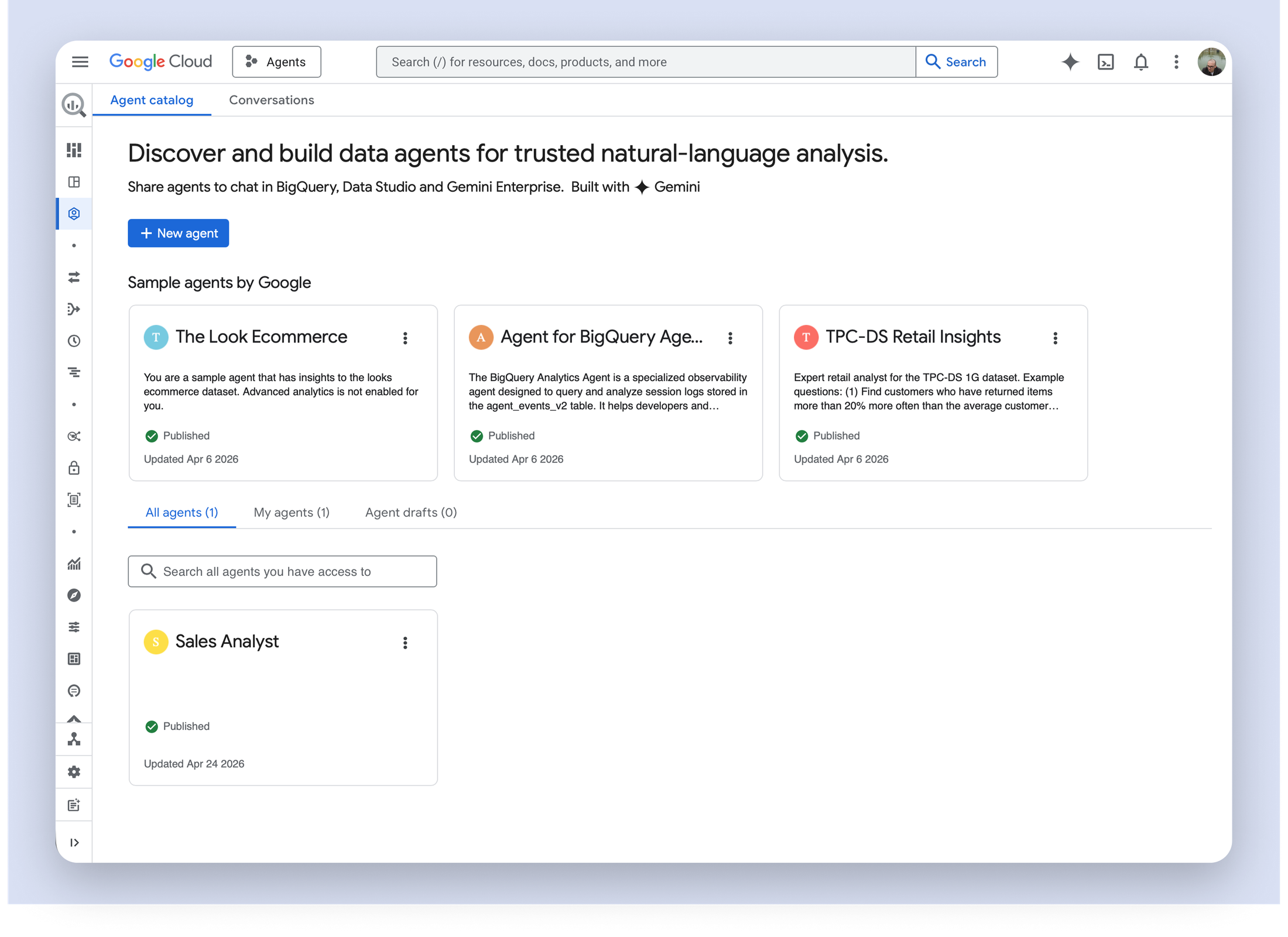
Once saved or published, the agent appears in the agent hub, where users can start conversations or share their agent across platforms.
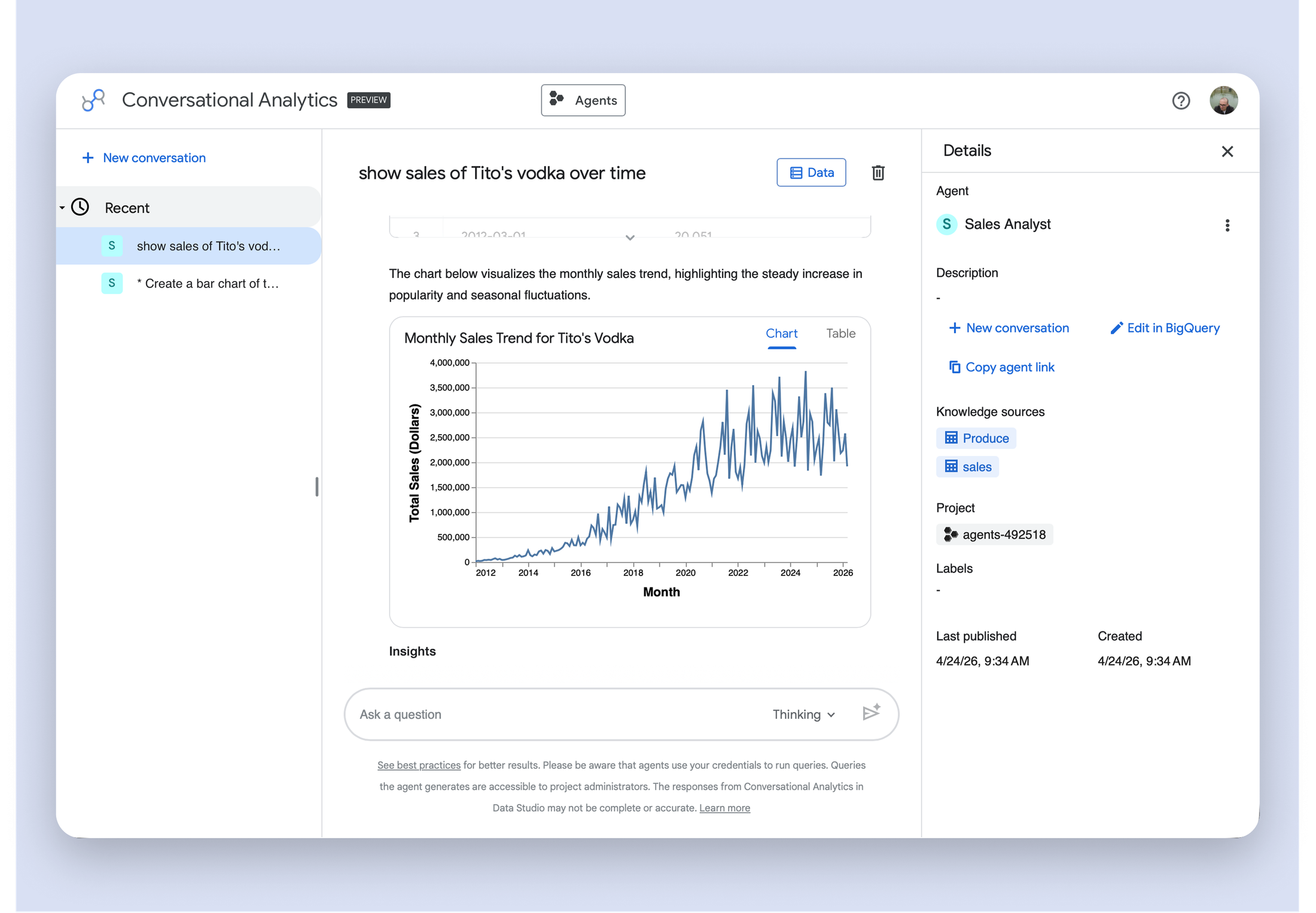
The agent can be shared onto less technical surfaces, like Google Data Studio, where their colleagues work.
Currently in private preview, initial evaluations showed a promising +10-20% increase in agent accuracy when using the structured context of the builder.